
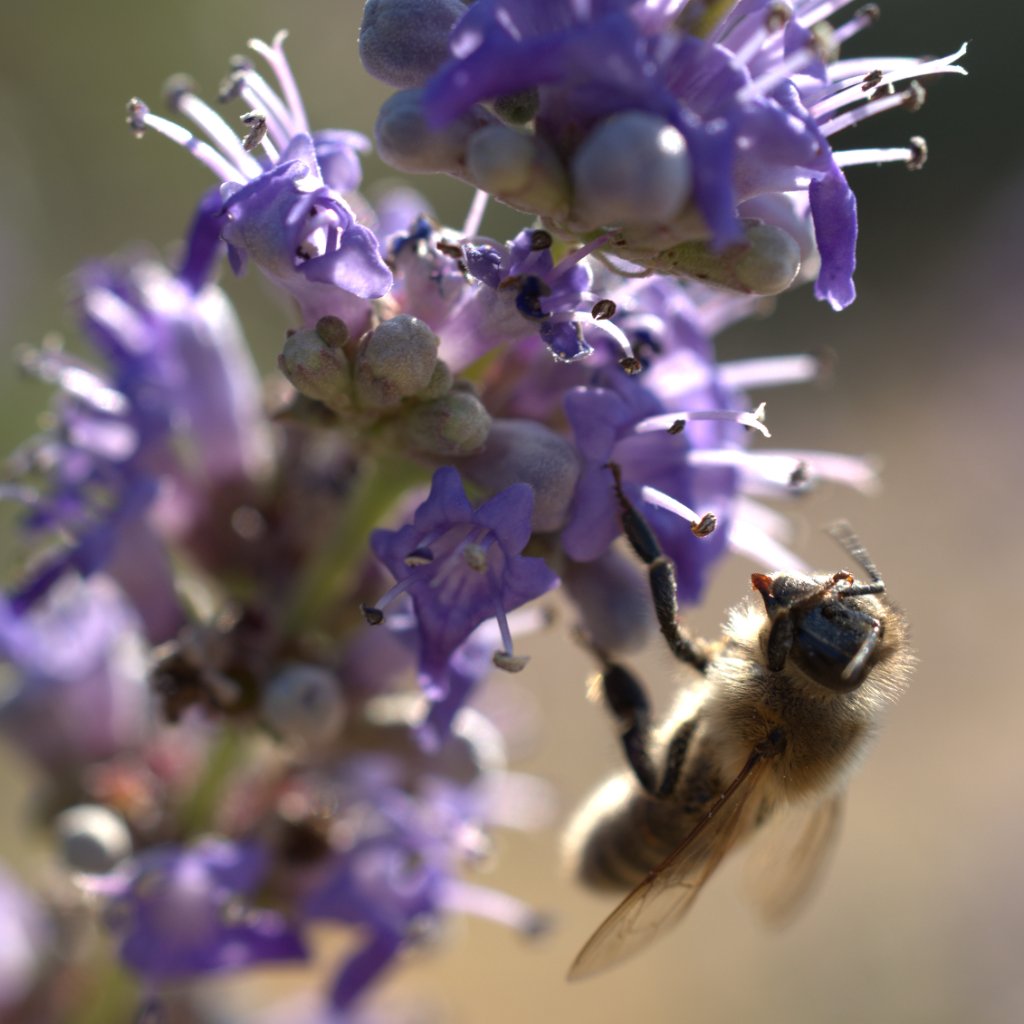
What We Do
Four kinds of work. One purpose.
Habitat, education, neighborhood renewal, and partnership are not separate programs competing for attention. They are the same project seen from four angles.
How We Work
From an idea to a garden
Nothing is planted until we know who owns the land, who agreed to it, and who will care for it afterward.
01
Someone points to a place
A neighbor, student, school, or property owner suggests a site.
02
We check the basics
Ownership, sunlight, soil, water access, and how the space is used.
03
Permission first
Written approval from the owner before any work is scheduled.
04
Design for the site
Native species chosen for that location's conditions, not a generic kit.
05
Plant, learn, and tend
A community planting day, then a shared care plan for the seasons ahead.
Native Habitat Restoration
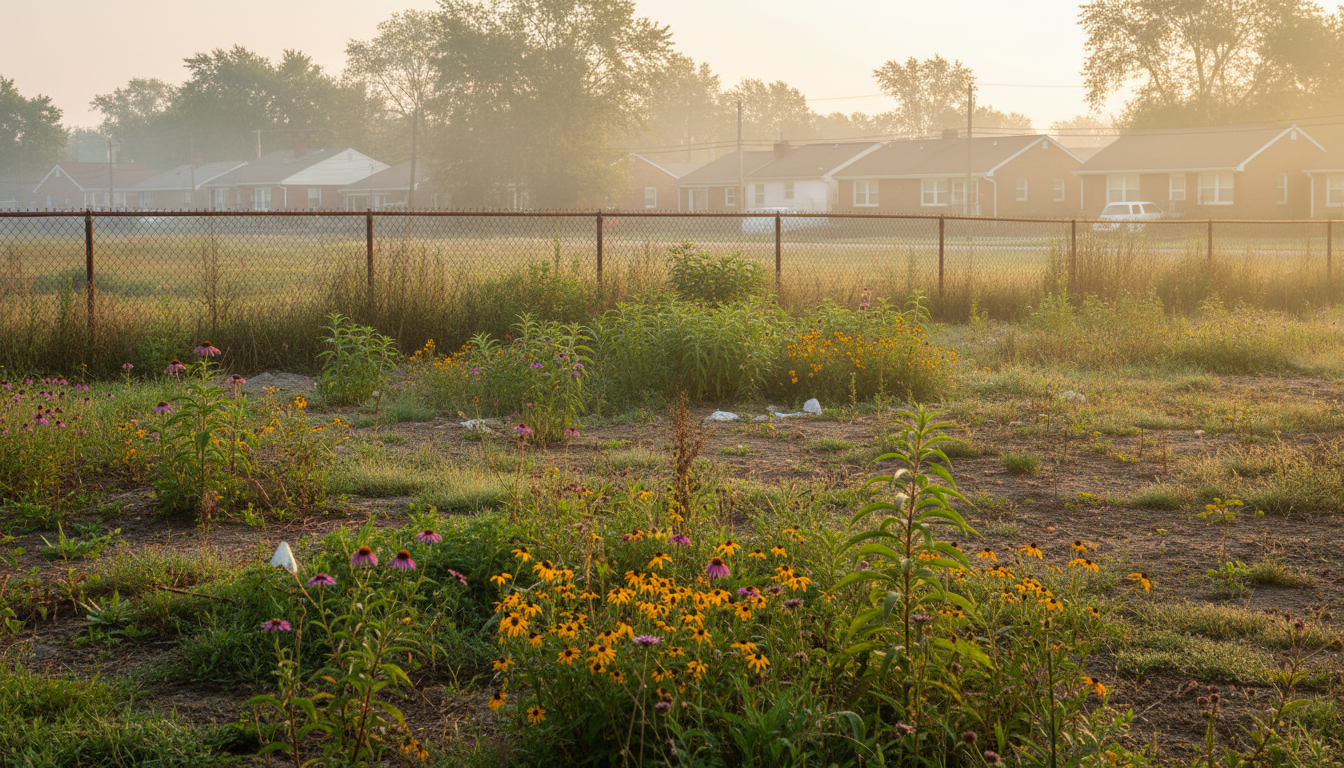
Turning suitable overlooked land into native plant habitat
Native plants and insects evolved together. When a space is planted with species native to Central Ohio, it provides the food and shelter that pollinators and other beneficial insects need to complete their life cycles — nectar and pollen through the season, host plants for caterpillars, and stems and ground cover for overwintering.
Project Pollinator identifies vacant lots, underused land, and community spaces where a native garden is genuinely suitable: enough sun, workable soil, water access, and an owner willing to say yes. We do not treat every empty lot as interchangeable, and we do not plant a site that cannot be cared for.
- Species selected for Central Ohio conditions and for the specific site
- Plantings designed to feed pollinators across the whole season
- Gardens planned for maintenance that neighbors and students can sustain
In development: our first sites are being identified and evaluated.
Youth Leadership & Environmental Education
Students do the work, not just the photo op
Project Pollinator exists because a student took his own neighborhood seriously. Our education work is built on that premise: young people should have real roles in environmental planning, hands-on learning, conservation, community storytelling, and local leadership.
A garden is an outdoor classroom where ecology stops being abstract. Students learn to identify plants, observe insects, read a site, keep records, and explain their work to neighbors and decision-makers. They also learn the unglamorous parts — permissions, schedules, and follow-through — that make community projects last.
- Student-led site observation and pollinator documentation
- Photography and storytelling that connects neighbors to the work
- Leadership roles in planning, planting, and stewardship days
In development: educational activities will be scheduled alongside our first garden sites.
Neighborhood Revitalization
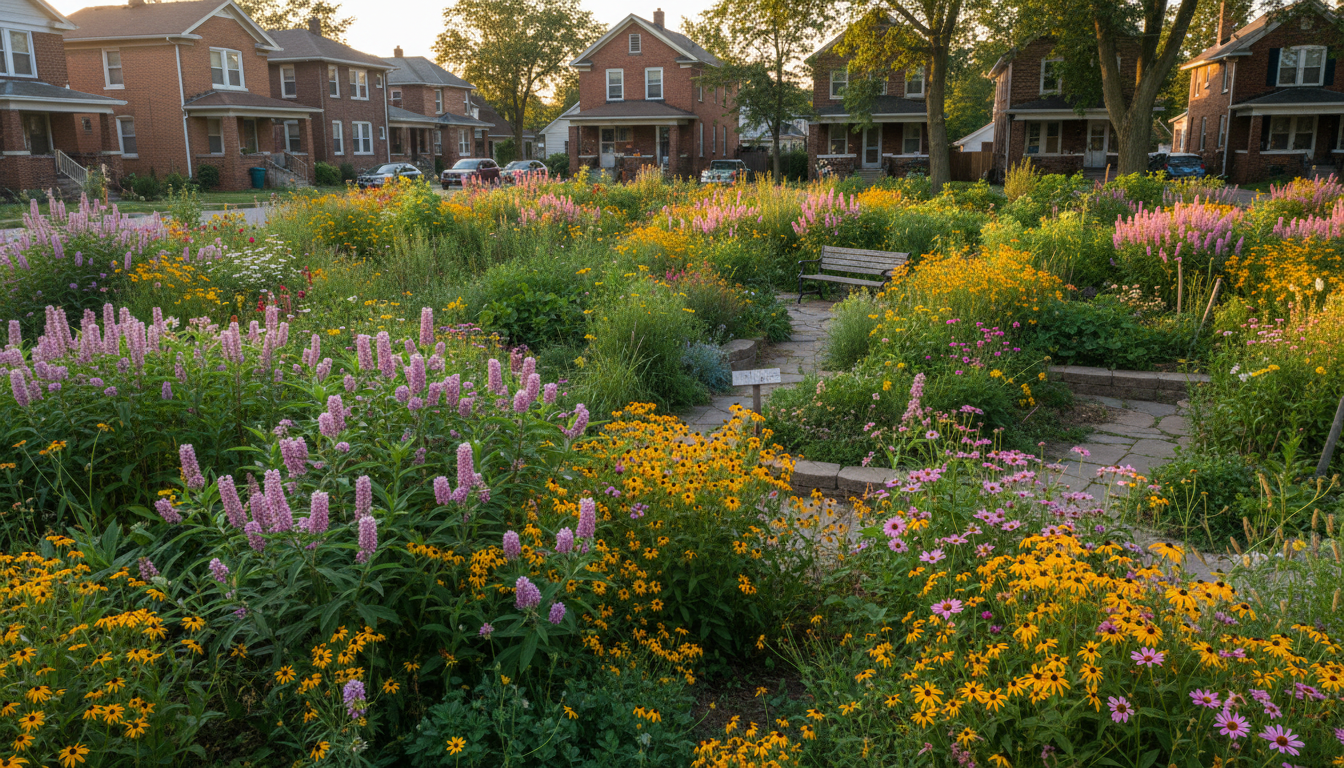
Beauty that invites stewardship
A vacant lot is not only an ecological loss. It is a daily message to the people who live around it that this place does not matter. Reclaiming that land changes the message.
We are careful not to overstate what a garden does by itself. Beautification is real, but it works best when it brings people into caring for a place together — planting days, watering schedules, and neighbors who notice when something is blooming.
- Visible improvements on blocks that have been overlooked
- Shared workdays that build relationships among neighbors
- Civic pride grounded in a place people can visit and care for
In development: neighborhood outreach will precede any planting.
Community Partnerships
No one plants a garden alone
Finding a site, securing permission, sourcing plants, and keeping a garden alive takes more than one person. Residents, property owners, schools, youth groups, businesses, environmental organizations, and volunteers each bring something a project needs.
We are building a network of people willing to contribute land, knowledge, materials, time, or a connection. If your organization would like to explore a partnership, we would like to hear from you.
- Site owners and managers willing to host a habitat garden
- Schools and youth groups interested in outdoor learning
- Businesses and organizations offering materials, expertise, or volunteers
Open: we are actively looking for partners for our first sites.
We describe our work in the tense it deserves. Some of what you have read is happening now; some is planned. Where a program is still developing, we say so.
See where our projects standBring us a site, a school, or a Saturday
The fastest way to start a garden is a neighbor who knows a spot that deserves one.