
Learn About Pollinators
A short guide for students, teachers, families, and neighbors
What pollinators do, why native plants matter, and how to make a small piece of ground more useful to insects — starting with the space you already have.
The Basics
What is a pollinator?
A pollinator is an animal that moves pollen from one flower to another, allowing a plant to produce seeds and fruit. Insects do most of that work. Wind and water move some pollen too, but flowering plants and insects have been shaping each other for millions of years.
Ohio's native bees, butterflies, moths, beetles, flies, and wasps are not interchangeable. They are active at different times of year, need different flower shapes, and nest in different places. That variety is the point: a garden that feeds one kind of insect well is not the same as a garden that supports a community of them.
Biodiversity matters for reasons that are practical as well as beautiful. Diverse insect communities pollinate plants, recycle nutrients, and feed the birds and other animals above them in the food web. When habitat disappears, that web thins.
Who visits a garden
Bees
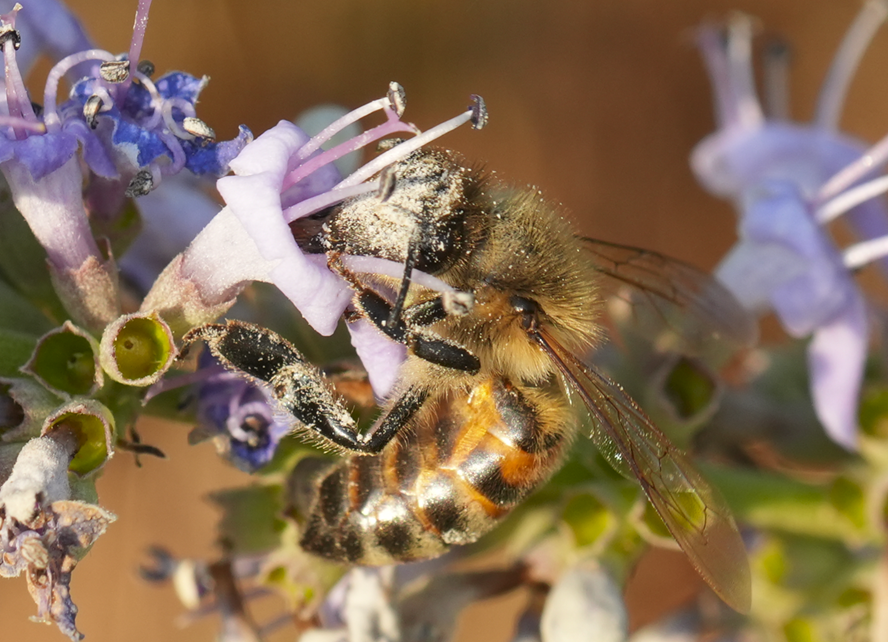
Ohio is home to hundreds of native bee species, most of them solitary rather than hive-dwelling. They collect pollen to provision nests and are among the most effective pollinators.
Butterflies & moths
Adults drink nectar; caterpillars eat leaves. That is why host plants matter — a garden without the right leaves cannot raise the next generation.
Beetles
Often overlooked, beetles visit flowers for pollen and nectar and are important pollinators for some of Ohio's native plants.
Flies
Flower flies and other flies visit open, shallow flowers and can be abundant pollinators in urban gardens.
Wasps
Many wasps are predators of garden pests and also visit flowers for nectar, contributing to pollination along the way.
Why Native Plants
Plants that belong here feed the insects that belong here
Native plants are species that occur naturally in a region. Local insects are adapted to them in ways they are not adapted to most ornamental imports.
Host plants raise caterpillars
Many insects can only reproduce on specific native plants. Monarchs need milkweeds; other species have their own requirements.
Right plant, right place
A native species still needs the conditions it evolved for. Sun-loving prairie plants fail in deep shade, no matter how native they are.
Roots built for local weather
Deep-rooted natives generally handle Ohio's summer dry spells and winter cold better than plants adapted to other climates.
Ohio Native Plant Starter Guide
Eight species to know
Ohio DNR's pollinator garden guidance highlights four native summer wildflowers. The rest are species Project Pollinator has referenced in its own planting plans.
Purple coneflower
Echinacea purpurea
Long-blooming nectar source. One of the four species in Ohio DNR's native garden seed packet.
Gray-headed coneflower
Ratibida pinnata
Yellow prairie coneflower with a tall, open habit. Also in Ohio DNR's pollinator seed packet.
Wild bergamot
Monarda fistulosa
A mint-family native that draws bees, butterflies, and hummingbirds. Included in Ohio DNR's packet.
Mountain mint
Pycnanthemum spp.
Highly attractive to small bees and wasps. Included in Ohio DNR's packet.
Common milkweed
Asclepias syriaca
A monarch host plant. Spreads readily, so give it room.
Butterfly weed
Asclepias tuberosa
Orange milkweed for monarchs; prefers well-drained soil.
Black-eyed Susan
Rudbeckia hirta
Hardy, adaptable wildflower that attracts beneficial insects.
Ohio goldenrod
Solidago ohioensis
Late-season nectar for migrating pollinators.
Verify before you plant. Suitability depends on your specific site — sunlight, soil type, drainage, and space. No list can promise that every plant will work everywhere. Check with Ohio DNR, your county extension office, or a nursery that specializes in Ohio natives. Avoid species listed as invasive in Ohio, and never dig plants from the wild.
At Home or at School
Five steps to a small pollinator space
You do not need an acre. A bed, a border, or a few containers can support insects if you plant deliberately.
Start with the site you have
A yard corner, a school bed, a church lawn, or a strip along a sidewalk. Watch how much sun it gets and where water collects.
Choose native plants for those conditions
Match species to sun, soil, and moisture. Ask a local nursery or extension office which Ohio natives suit your spot.
Plan for water and patience
New plantings need watering through their first season. Native plants establish strong roots, but they are not maintenance-free in year one.
Reduce unnecessary pesticide use
Insecticides and herbicides do not distinguish between pests and pollinators. Use the least aggressive approach that solves the actual problem.
Document what arrives
Photograph insects on flowers, note the date, and revisit the same plant through the season. Observation is real science.
Before planting on land you do not own — including a schoolyard — get permission from whoever manages the property. That is the same standard we hold ourselves to.
Turn a lesson into a garden
Teachers, students, and neighbors can bring this knowledge to a real site. We would like to help.